One prompt is not a process - what separates AI slop from work you can ship

Vlad Kruk
Vlad Kruk

•

Co-founder, AI25.studio

•

•

3

mins

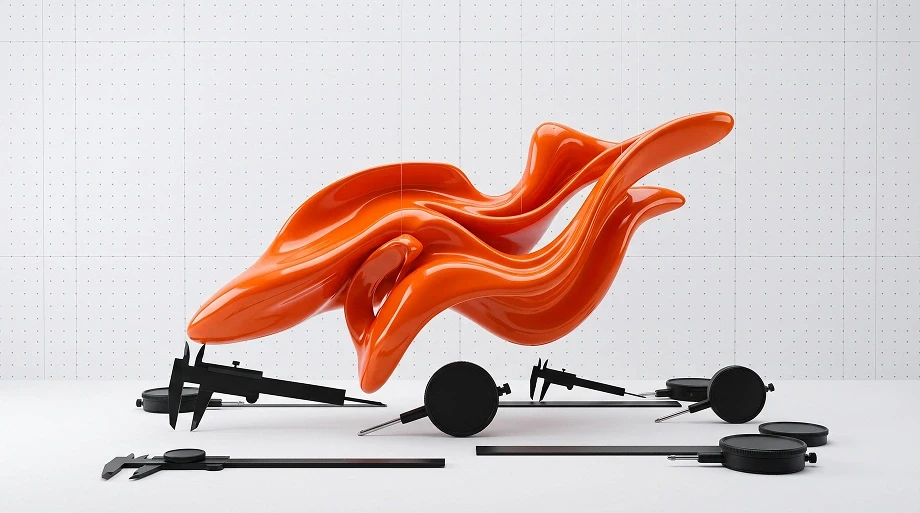
Glossy orange abstract form sweeps through the air above black rods, wheels, and mechanical parts on a pale gridded studio backdrop.

The difference between AI slop and AI creative a brand can run is not the model. It is the number of human decisions between the first prompt and the final file. One prompt produces content. A multi-step process with a person choosing at every stage produces work.

What slop looks like from the inside

01

What one finished image really takes

02

The questions we ask before anything ships

03

Curation is the job

04

What slop looks like from the inside

Everyone recognizes slop from the outside: the waxy skin, the gradient soup, the composition that feels like it was assembled by committee-of-none. From the inside, slop has a simpler definition. It is output that went straight from prompt to publish.

The tools invite exactly that. Every generator demo shows a one-line prompt becoming a polished frame in seconds, and marketing teams under deadline pressure take the demo at its word. The result floods feeds, and serious clients now flinch at "AI-generated" because the label covers both a throwaway post and a broadcast-grade spot, with no way to tell from a thumbnail which one you are about to get.

The fix is not a better prompt. It is admitting that the demo was never the process.


What one finished image really takes

Agencies that publish their kitchens - Level Agency did this recently with a mock product shot, and their write-up matches our experience shot for shot - land on the same shape: something like eight distinct steps for a single finished image. Not eight prompts. Eight stages, each with a human decision in it.

Ours looks like this on a typical product visual. Moodboarding in an image model to find the visual territory. A dedicated pass to get the product itself right, because generic models mangle labels and proportions. Selection - the step where two hundred candidates become three. Compositing the approved product into the approved scene. A realism pass. Upscaling. Retouch and finishing in a proper design tool, by a designer, on layers. And a final review against the brief before anything leaves the building.

Strip any one of those and you can see it in the file. Strip four and you have slop with good lighting.

We don't generate. We produce. The sentence is on our site because it compresses everything above into five words.


The questions we ask before anything ships

Process only helps if there is a gate at the end. Before an AI-assisted asset goes to a client, someone here has to answer for it:

  • Would this hold up printed large, not just at feed size?

  • Is the product true - label, proportions, materials - or merely plausible?

  • Does it sit inside the brand's world, or inside the model's default aesthetic?

  • Are hands, text, edges and reflections clean at 200% zoom?

  • Could a competitor have generated this exact frame? If yes, it is not distinctive enough to ship.

Five questions, thirty seconds each. They kill perhaps a third of work that looked fine at first glance, and that third is precisely the gap between us and a prompt.


Curation is the job

Here is the uncomfortable part for anyone selling "AI at the push of a button": the model contributes volume, and volume has almost no value. Value concentrates in the choices - which direction, which candidate, which crop, which imperfection to keep because it reads as human.

That choosing cannot be delegated to the tool that produced the options. It needs someone with references in their head and a stake in the outcome. Which is why the honest pitch for AI creative is not "faster and cheaper with no people". It is "faster and cheaper because the people moved to where they matter - the brief and the edit".

Quick answers

Process, timelines, pricing & deliverables.
Is AI slop a model problem or a process problem?

Does more process kill the speed advantage?

Can you tell shipped work was AI-assisted?

How many steps should a real AI image workflow have?

How do I brief AI creative as a client?

Vlad Kruk

Vlad Kruk

Co-founder, AI25.studio

10+ years in classical production, 3D, and VFX. Now building the AI production pipeline at AI25.studio — high-end content at half the cost, twice the speed. Without slop.

Need it fast, and need it to hold up?

High-end quality. AI-native speed. Enterprise-ready by design.

Need it fast, and need it to hold up?

High-end quality. AI-native speed. Enterprise-ready by design.

STAY IN THE LOOP

New pipeline breakdowns. Once a week. No fluff.

Need it fast, and need it to hold up?
High-end quality. AI-native speed. Enterprise-ready by design.

STAY IN THE LOOP

New pipeline breakdowns. Once a week. No fluff.

16:38

• Warsaw, Poland

•

Have a project in mind?
Talk to our production team.

//ABOUT AI25.STUDIO

AI25.Studio is an AI video production studio based in Warsaw, Poland, working with brands, agencies and production companies in Poland, the EU and the US. Founded in 2025 by a team with more than ten years in commercial filmmaking, 3D, VFX and post-production, the studio produces commercials, brand films, series, social campaigns and product visuals with one senior-led pipeline: creative direction, generative AI, live action, 3D and CGI, editing, colour, sound and delivery. Every project runs on licensed tools with a documented production record. AI is the tool. Craft is the foundation.

© 2026 AI25.STUDIO ALL RIGHTS RESERVED.